

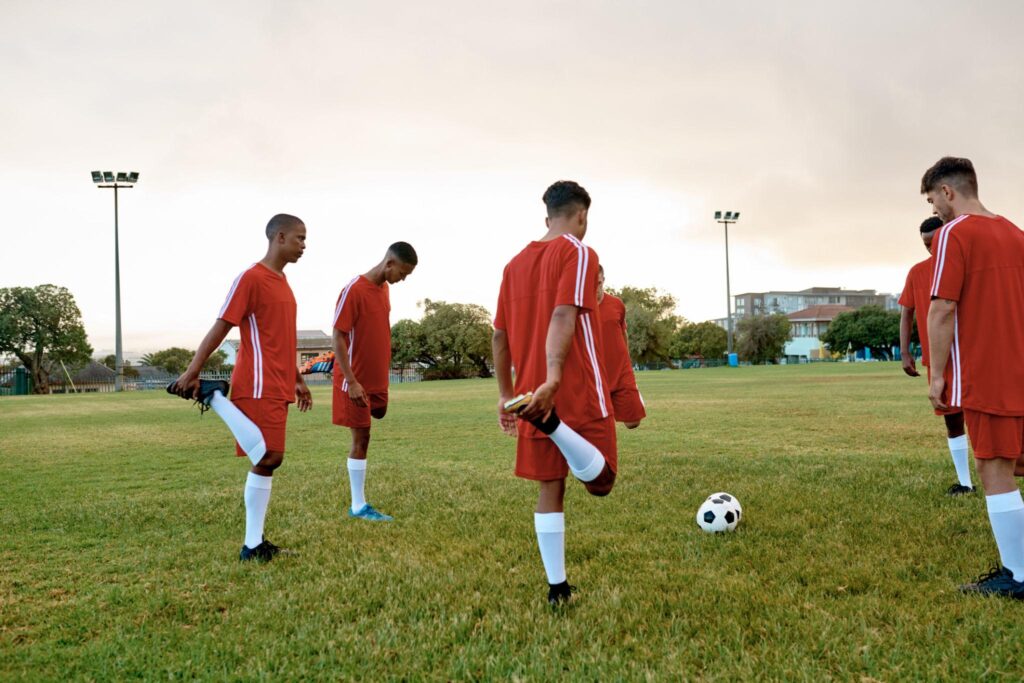
Quick Answer: The best time of year to run a school sports fundraiser is 4 to 6 weeks before your season starts, when rosters are set, motivation is high, and families have time to plan. For fall sports that means late July through early September. For winter sports, October through early December. For spring sports, February through early April. Because urgency and energy are highest in the preseason window, that timing consistently produces the strongest participation and the least coach workload.
What Is the Single Best Time to Run a School Sports Fundraiser?
The best time is the preseason window, approximately 4 to 6 weeks before your first game or first performance.
That is when athletes are fully bought in, coaches still have attention to spare, and parents have not yet been consumed by game schedules and travel logistics. Additionally, it aligns with real program needs because the earlier you fundraise, the earlier you can pay for officials, transportation deposits, equipment reconditioning, tournament entry fees, and team gear orders.
A practical example: If your basketball program needs $12,000 for travel, tournament fees, and new practice jerseys, running the fundraiser in October gives you time to collect, order, and avoid putting unexpected costs on families in December when budgets are already tight.
Why Does Preseason Fundraising Outperform In-Season Fundraising?
Preseason works better because you have urgency without exhaustion.
During the season, athletes are tired, parents are juggling travel and work, and coaches are focused entirely on film, practice plans, and injuries. Even a well-run school sports fundraiser slips when the calendar fills up with competitions and travel.
Preseason also creates a cleaner story for donors. Because donors respond better to a clear starting line than to a mid-season emergency ask, framing the fundraiser as helping the team launch the season tends to produce higher average gifts and faster decisions.
What Months Are Best for Fall Sports Fundraisers?
Late July through early September is the strongest window for fall sports.
Back-to-school energy is high, rosters are forming, and families are returning to predictable routines. Donors also respond well to a new school year message because it feels like a fresh start rather than another ask mid-cycle.
What is the ideal week to launch a fall sports fundraiser? The first or second full week of school, or the week immediately after tryouts, is the strongest launch point. Starting too early in summer means missing families on vacation. Starting too late means running into games, travel, and homework pressure simultaneously.
For football, cheer, volleyball, soccer, and band programs, a practical target window is August 10 through September 10, followed by one short follow-up week for late participants.
What Months Are Best for Winter Sports Fundraisers?
October through early December is the optimal window for winter sports.
Getting ahead of Thanksgiving week and final exams is critical because both events suppress donor response rates significantly. Additionally, you want funds collected before holiday spending squeezes donor budgets in late November and December.
How do you avoid donor fatigue during the holiday season? Shorten the campaign and tighten the message. Instead of a four-week grind, run a focused one to two week drive with a specific goal such as $8,000 for tournament travel or $5,500 for new equipment.
This is precisely where a structured one-day model like the Gold Athletics Blitz Day shines. Because athletes make asks together with live coaching and real-time accountability, the work compresses into one focused event rather than dragging through the holiday period.
What Months Are Best for Spring Sports Fundraisers?
February through early April is the best window for spring sports.
Spring seasons move fast, and weather makeups and tournament weekends pile up quickly. If you wait until April, you are asking families to fundraise while simultaneously paying for spring break travel and tournament costs.
A realistic example: A baseball program planning a spring break tournament needing $9,000 for entry, lodging, and transportation benefits enormously from a February fundraiser. It gives the program time to collect and book without creating emergency parent payment requests in March.
Is Summer a Good Time to Run a School Sports Fundraiser?
Summer can work but it is typically inconsistent compared to the preseason window.
Participation often drops because families travel, work schedules shift, and communication is harder to sustain without the natural rhythm of a school day. However, if you must fundraise in summer, keep it short and focused:
- Pick one high-energy day or weekend rather than a multi-week campaign
- Set a clear per-athlete target such as $250 each
- Use text-based outreach and phone calls rather than paper order forms
- Track participation publicly so athletes can see who is active and who is not
Gold Athletics addresses this challenge directly through its app-driven athlete accountability system, which tracks outreach activity and keeps participation visible for coaches. Because visibility stabilizes results even when schedules are unpredictable, this approach works better than reminders alone during summer months.
What Weeks Should You Always Avoid for a School Sports Fundraiser?
Avoid weeks when attention and discretionary spending are at their lowest. Because losing even one week of momentum can cost thousands in missed donations, calendar protection matters as much as execution quality.
Worst windows to avoid:
- Thanksgiving week
- The last two weeks of December
- The first week back in January
- Spring break week
- Final exam weeks
- Homecoming week if your campus runs multiple simultaneous events
A simple way to estimate the cost of bad timing: If your average donor gift is $50 and you lose 60 donors because outreach stalls during finals week, that is $3,000 gone without any dramatic failure. It simply evaporates from your total.
Should You Align Your School Sports Fundraiser With Tryouts or Team Meetings?
Yes. Align your fundraiser with the moment commitment becomes real for athletes and families.
The strongest alignment points are:
- Immediately after final roster selection
- At the first official team meeting
- At the first parent information meeting
That is when you can set participation standards, explain the fundraising purpose, and connect the campaign directly to what the team needs to compete at its best.
What should you say at the first parent meeting? Open with the number and the plan rather than motivational language. For example: “Our total program goal is $18,000. We are funding transportation, officials, equipment, and scholarships. Each athlete is responsible for $300 in outreach. We will do it in a focused window so it does not drag all season.” Parents respect a coach who has a clear target and a clean calendar.
What Is the Best Time for an Athletic Department-Wide Fundraiser?
Early fall, right after school starts, is the strongest window for a department-wide school sports fundraiser.
Early fall captures the whole community before sport-specific schedules fragment attention. If you are an athletic director raising $50,000 for facility upgrades or shared program needs, September is often the sweet spot. Combining the campaign with community visibility moments like a fall sports pep rally or season opener creates additional momentum.
Gold Athletics works with school athletic programs nationwide, and the schools that run department-wide pushes early in the year consistently find it easier to keep sport-level fundraising quieter and less disruptive later in the school year.
How Far in Advance Should You Plan a School Sports Fundraiser?
Plan 6 to 8 weeks in advance even if the active fundraising window is only one to two weeks.
That planning window gives you time to lock in your fundraising goal and budget story, set athlete participation expectations, build your messaging and donor scripts, establish your tracking and accountability process, and confirm your incentive structure if you use one.
Because coached event models like the Gold Athletics Blitz Day require coordinating schedule blocks and team meeting space, the planning lead time matters as much as the execution itself.
What Fundraising Format Works Best at Different Times of Year?
The best format is always the one that matches the school calendar and coach capacity at that specific time.
When the calendar is busiest: A one-day or one-week push works best near holidays, exams, or heavy travel periods. The Blitz Day concept works especially well in these windows because athletes complete outreach together with live coaching support, and the whole campaign feels like a team event rather than an extra burden. Gold Athletics also includes a merchant rewards network that adds year-round community value after the main fundraiser closes.
When you have more calendar space: A two to three week campaign can work well in early fall or late winter when schedules are more predictable. Even then, keep it structured. Because longer campaigns turn into background noise without daily accountability, a visible progress tracker matters more the longer the campaign runs.
How Do You Pick the Best Fundraising Dates for Your Specific Program?
Use this six-step decision process to protect your calendar and maximize results:
- Identify your first official contest or competition date
- Count back 4 to 6 weeks and mark that as your target launch window
- Check the school calendar for exams, breaks, and major events in that window
- Choose a primary push week and a backup week for conflicts or weather
- Set your parent meeting date and your athlete launch date
- Decide how you will track participation daily throughout the campaign
The most common mistake programs make is launching a school sports fundraiser with no calendar protection, then watching it stall when life inevitably hits during the campaign window.
What Results Can You Realistically Expect When You Time It Right?
When you time a school sports fundraiser correctly, both participation rate and average gift size improve simultaneously.
Realistic examples from programs that run tight preseason pushes:
- A 40-athlete program averaging $250 per athlete raises approximately $10,000
- A 60-athlete program averaging $300 per athlete raises approximately $18,000
- A 100-participant band program averaging $200 per participant raises approximately $20,000
If your current fundraiser nets $6,000 and you need $12,000, the fix is often not a new product or a new platform. It is better timing, stronger accountability, and a shorter, more intense push.
That is the core principle behind structured models like Gold Athletics: reduce coach workload, increase athlete participation rates, and improve season-over-season results through a focused event and visible daily tracking.
Frequently Asked Questions
When is the worst time of year to run a school sports fundraiser? Late December through early January is consistently the worst window because families are busy, budgets are stretched by holiday spending, and communication reliability drops significantly. Because donor response rates fall sharply in this window, even well-run campaigns produce weaker results than the same campaign run in October or September.
How long should a school sports fundraiser run? One to two weeks is ideal for most teams, with one focused main push and a short follow-up period for late participants. Because campaigns longer than two weeks lose urgency, a compressed window consistently outperforms extended timelines even when total available days are fewer.
Can you run a school sports fundraiser during the season and still succeed? Yes, but you need a short, high-accountability format and a very specific goal tied to an immediate need. Because in-season campaigns compete directly with game schedules and athlete fatigue, a single focused day with coached execution works far better than a multi-week open campaign.
What if multiple teams fundraise at the same school at the same time? Coordinate through the athletic director to prevent teams from competing for the same donors in the same week. Because overlapping campaigns create donor fatigue faster than any other single factor, department-level calendar coordination directly protects every team’s results.
Should a program fundraise once per year or once per season? Most programs perform best with one main fundraiser per year followed by smaller sponsor or merchant rewards activity throughout the year. Because a single well-timed campaign with full participation outperforms two smaller campaigns with split attention, consolidating effort into one focused window is usually the stronger strategy.
What is the best time to fundraise for band, cheer, or non-varsity groups? Use the same preseason rule: 4 to 6 weeks before competitions begin. For fall programs that typically means August. For spring programs it means January or February. Because the timing principle applies across all school activity programs, not just varsity sports, the preseason window works regardless of program type.